
There is a moment most of us have lived through in church, though we rarely talk about it afterward. Someone speaks with great confidence. A verse is named, or only the word biblical, or the sentence God told me. The room settles. And somewhere in that room is a person who feels a small question rising, and lets it go.
This series has spent five articles on the one who spoke. This last one is for the one who was listening.
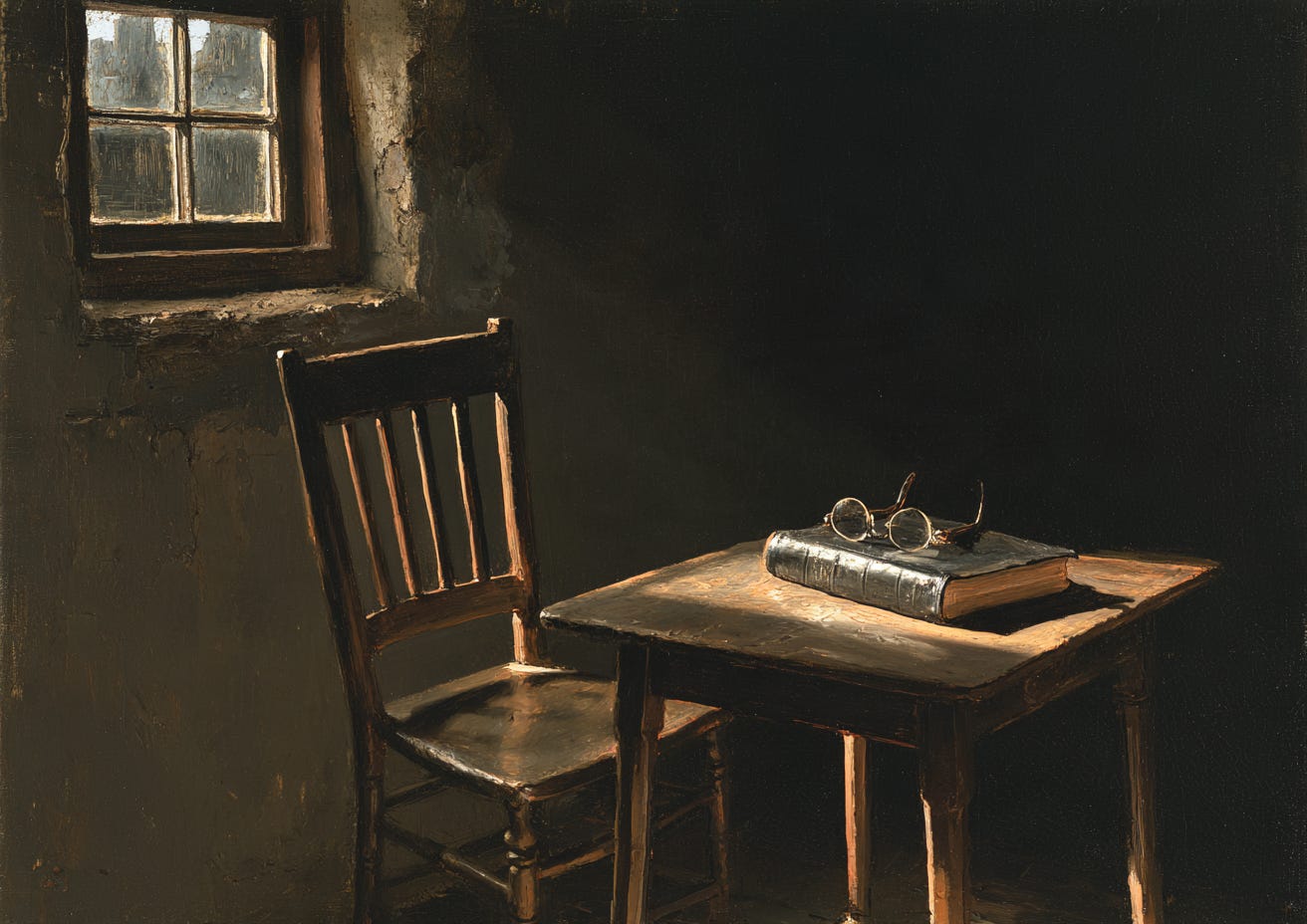
If that has been you, nothing here is a scolding for having trusted. Trust is how the body of Christ is meant to work. But you were never meant to be helpless in front of a confident voice, either. You have a Bible, in whatever faithful translation sits on your shelf or your phone, and you have the freedom to open it. That is not a small thing, and it is not a permission somebody granted you. Scripture itself treats it as yours.
How May We Know?
Deep in the laws of Deuteronomy, God warns His people about the prophet who speaks a word in His name that He did not give. And then He does something remarkable. He hands them the question they will need.
“And if you say in your heart, ‘How may we know the word that the LORD has not spoken?’” (Deuteronomy 18:21 ESV).
Notice who is asking. Not the priests. Not the prophets. The people.
In a good many churches that question feels dangerous. To ask where something is in the Bible can sound like doubting the man who said it, and some of us were taught, without anyone quite saying so, that doubting him was close to doubting God. But here is God Himself, putting the words in front of His people before they ever needed them. Asking was never disloyalty. God put the question in His people’s mouths Himself.
The answer He gives belongs to its own setting. It concerns a prophet who foretells something, and whether it comes to pass. Most of what we hear in church is not that, and I will not pretend it is. But two things carry straight across. The question is allowed. And the passage ends with a sentence I had read many times before I noticed it.
“You need not be afraid of him” (Deuteronomy 18:22 ESV).
God said that about a prophet who had spoken presumptuously. But it tells us something about His heart toward the people listening. He did not want them held in place by fear of a man who sounded sure. Respect the one who teaches you. Love him. Listen to him carefully. You do not have to be afraid of him.
The Bereans
In the book of Acts, Paul and Silas came to Thessalonica, and for three Sabbaths Paul reasoned in the synagogue from the Scriptures. His message was that the Christ had to suffer and rise from the dead, and that “This Jesus, whom I proclaim to you, is the Christ” (Acts 17:3 ESV). Some believed. Others grew jealous, gathered a mob, and set the city in an uproar. Paul and Silas had to leave by night, for a town called Berea.
Here is what Luke says about the people they found there.
“Now these Jews were more noble than those in Thessalonica; they received the word with all eagerness, examining the Scriptures daily to see if these things were so” (Acts 17:11 ESV).
Look at whom they were examining. Not a rumor. Not a stranger passing through. An apostle. The man who would write a good part of the New Testament stood in their synagogue, and they went home and opened the Scriptures to see whether what he said was so. They did it daily. And Luke does not tell us that anyone took offense. He counts it to their credit.
Look, too, at how they did it. With all eagerness. They were not hunting for a reason to dismiss him. They were hungry for what he was telling them, and because it mattered so much, they wanted to know it was true. Examining was not suspicion. Eagerness was not credulity. In Berea they were the same act.
The word noble needs a little care. Luke is comparing them with the people in Thessalonica who answered Paul with jealousy and a mob, not with everyone there. Some in Thessalonica believed, too. The Bereans were not nobler for being harder to convince. They were nobler for taking the word seriously enough to read it for themselves.
And their examining ended somewhere. “Many of them therefore believed” (Acts 17:12 ESV). Therefore. Reading for themselves did not make them skeptics. It brought them to faith.
What It Looks Like in a Pew
So what does it look like for an ordinary church member to be a Berean? Mostly it is quiet, and mostly it happens at home.
When a sermon says a passage teaches something, find the passage. Read the verses before it and the verses after. Ask what the writer was answering, and whom he was writing to. You do not need Greek. You do not need a shelf of commentaries on the first pass. You need the Bible you already own and an unhurried half hour.
If something still does not sit right, ask. Ask kindly, and ask plainly: “Where do you see that?” You are not the teacher’s prosecutor, and he is not your opponent. You are two people who want to know what God has said. If you can, read it together, or bring a brother or sister who will read it with you.
And do it for everyone, not only for the voice you already distrust. The Bereans examined a man they were eager to believe. The claims most worth checking are often the ones we already agree with, because those are the ones we never open the book to see.
Sometimes you will read the passage and find it says exactly what you were told. That is not wasted time. You will hold it more firmly now, because you have seen it with your own eyes. Sometimes you will not be sure what it says. That is all right, too. Say so, keep reading, and ask someone who has been reading longer than you have. Not knowing yet is not the same as being wrong.
Here is the plainest case I know. A preacher tells his people what another religion’s book teaches. He says it with confidence, and he has never read it. Most of us have heard that, and some of us have repeated it. That failure is ours, not theirs, and it is exactly the kind of claim you are entitled to ask about: have you read it? It does not take a scholar to ask. It takes a hearer who knows he is allowed.
If you are the one who teaches, none of this is a threat. A church full of Bereans is a church that is hard to mislead, including by you on your worst day. A faithful teacher is glad of the question.
What the Scriptures Are For
There is one more thing to say, and it matters more than all the rest.
It is possible to search the Scriptures carefully and still miss the point. Jesus said so to men who knew their Bibles far better than most of us do.
“You search the Scriptures because you think that in them you have eternal life; and it is they that bear witness about me, yet you refuse to come to me that you may have life” (John 5:39–40 ESV).
Consider whom He was saying it to. Not careless readers. These were men who prized the Scriptures and studied them closely. They were right that the Scriptures held life. But they treated the book as the destination, and walked past the One it was pointing to. The danger in John 5 is not reading too little. It is reading that never arrives.
The Bereans did not stop short. What they were examining, day after day, was whether Jesus is the Christ. Luke does not repeat the sermon they heard, but he calls it the word of God, proclaimed in Berea as it had been in Thessalonica. They opened the Scriptures, and they found Him there.
That is what your open Bible is for. Not finally for winning an argument, or for catching a preacher out, or even for protecting yourself, though it can help with that. It is where Christ is found.
The End of the Series
This is the last article in this series. Five weeks ago it began with what we put God’s name on. It ends with the One the name was always pointing to.
Read for yourself. Read eagerly. And when the page shows you Christ, come to Him.