
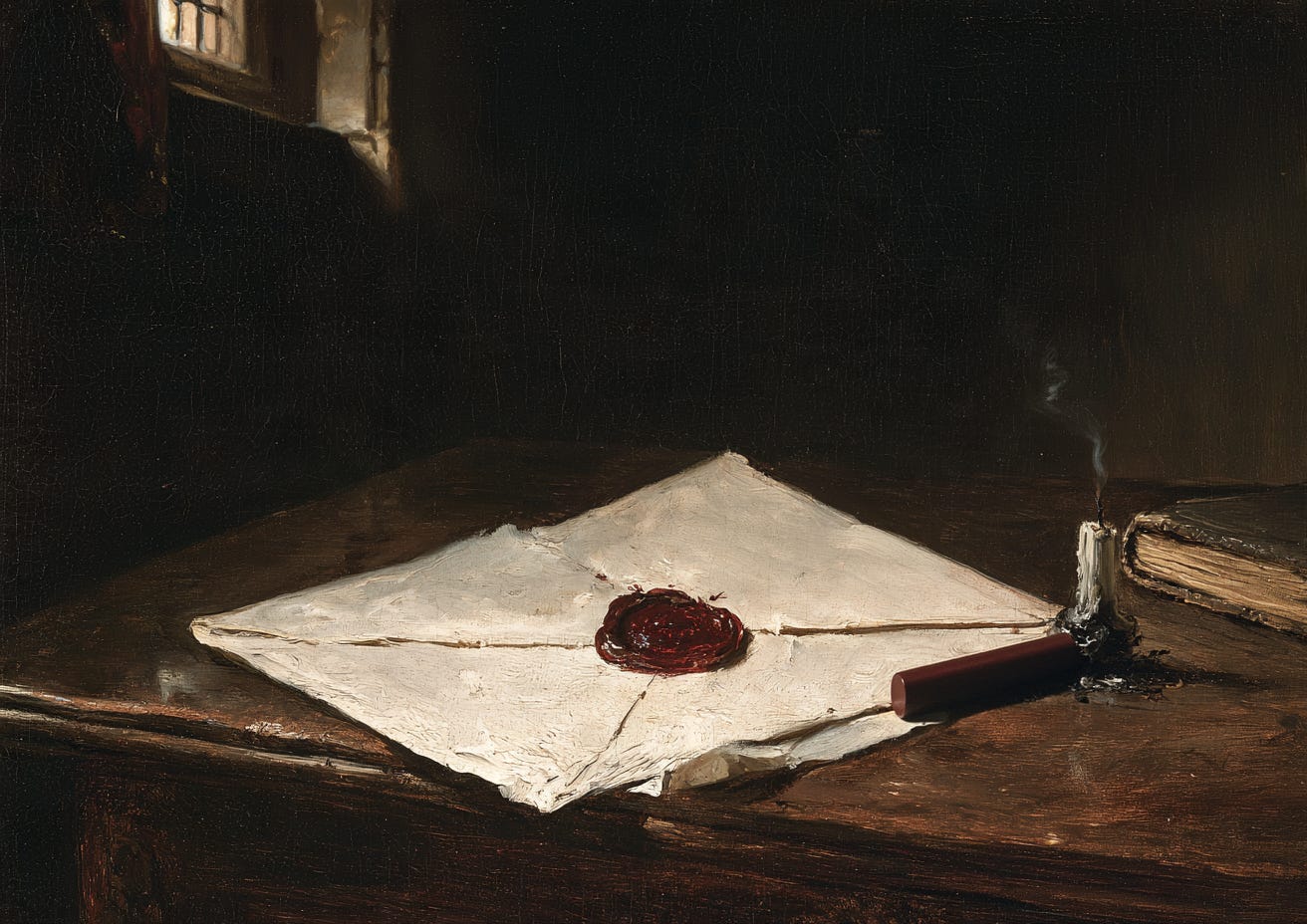
Most of us learned the third commandment as a rule about language. There was a word you did not say, and if you said it, someone older looked at you a certain way. In some homes the look came with soap.
I want to grant that plainly before I say anything else. The commandment does cover careless speech about God. A man who uses the name of the Lord as punctuation is doing something it forbids, and I am not here to make that smaller.
But I have come to think we learned it too small. This is a commandment that carries a warning of its own, a sentence God attached to it about the man who breaks it. And the verb in it is a good deal bigger than say.
The Verse
Here is the whole of it.
“You shall not take the name of the LORD your God in vain, for the LORD will not hold him guiltless who takes his name in vain” (Exodus 20:7 ESV).
The word translated take is one of the most ordinary verbs in the Hebrew Bible. It means to lift something up, to carry it, to bear it. It is the verb for picking up a load and walking off with it. A few chapters later, Exodus uses the same verb for bearing names before the Lord.
The words in vain translate a word for what is empty, worthless, or false. When Deuteronomy gives the commandment against false witness, this is the word it uses for false.
And there is one line in the Psalms where the two words stand side by side. Psalm 24 asks who may stand in God’s holy place, and part of the answer is the man “who does not lift up his soul to what is false” (Psalm 24:4 ESV). Lift up. What is false. The same two words, in one breath.
Read that way, the commandment says something like this. Do not carry His name to what is empty. Do not attach it to what is false.
Many careful readers of the text hold that reading, and I think it is well supported. But I want to be honest about its limits. It is not the only way the verse has been read, and it does not make careless speech harmless. The narrower reading sits inside the wider one. A man who swears by God’s name over nothing is still lifting it up and setting it on something empty.
I am not going to tell you this is the only way to read it. That would be doing the thing this article is about.
Weight
Here is what that reading opened up for me.
Most of us were warned against using God’s name too lightly. Hardly anyone was warned against using it to add weight.
That second thing happens in churches all the time, and almost never by people who think they are doing anything wrong. A man has a conclusion. He believes it. But on its own it is only his, and he can feel that it will not hold the way he needs it to. So he sets God’s name on it, and now it carries more than he could have made it carry alone.
Nobody says it that way, of course. Nobody stands up in a meeting and announces that his opinion needs help. It happens in the choice of a word, in a tone of voice, in the moment a conversation about what is wise turns into a conversation about what God requires. You can usually hear the change if you are listening for it. The question stops being whether a thing is a good idea, and becomes whether you are willing to be found on the wrong side of God.
It shows up in three habits. The first is the word biblical used as the last word in an argument, said in a tone that means the conversation is over. The second is God told me. The third is a confident claim about what a passage means, made by someone who has never actually sat with the passage.
They look different. They are one thing. Each lets God’s name carry what only a man has said.
And I understand why good men do it. The name ends arguments. It is the heaviest word in any room, and it is always lying within reach when you are tired, and outnumbered, and sure you are right. I do not think most men who reach for it are trying to deceive anyone. I think they are trying to win something they care about, and they have found the one word nobody in the room will argue with.
The One Who Believed It
There is always someone on the other end of that sentence.
Usually it is a person who trusted the one speaking. A member who heard an elder say this is what Scripture teaches, and took him at his word. A young couple who were told that God had made the church’s direction clear, and took it as settled.
I want to be careful here, because it would be easy to make those people sound foolish, and they were not. They trusted someone who sounded sure. That is not gullibility. It is what people are supposed to be able to do with the ones who teach them. The fault is not in the trust. It is in what was done with it.
And here is the part I had not seen until I sat with this commandment. When God’s name is set on a man’s conclusion, the person listening is given nothing to test. You can disagree with a man. You can ask him how he knows. But you cannot argue with God told me without seeming to argue with God. The claim was built, whether anyone meant it that way or not, so that it could not be answered.
What those people were owed was not more certainty. It was a way to check.
The Word on My Own Book
I have to stop here, because I wrote a book with that word on its cover.
It is called unBiblical Eldership, and I have never once on this platform said what I mean by the word. If I am going to write about what we attach God’s name to, I owe you that first.
When I call a way of leading unBiblical, I am making a specific claim. I am saying it is a way of leading that the texts themselves, read whole and in place, contradict. And the word is honest only when you can open the Bible and see it for yourself. If you cannot, I have not shown you anything. I have only told you what to conclude and signed it with God’s name. At that point the word was not a description. It was a gavel.
So here is the temptation, and it is mine, and it is current. A man with that word on his book’s cover can reach for it very easily. I notice how quickly biblical and unBiblical come to my mouth in a conversation, and how often, when I look at what I actually mean, what I mean is I disagree with you. The word arrives first. The reasons come later, if they come at all. And it does not feel like misuse while I am doing it. It feels like conviction.
That is the very thing this commandment is about, and I do it.
Carrying It
Go back to the verb one more time. A name is carried. And the warning in the commandment falls on the one doing the carrying, not on the name.
That is good news, in its way. It means the name itself is never in danger. God’s name was heavy before any of us picked it up, and it will be heavy after we have all set it down. Nothing we attach it to makes it less. It only makes us less honest, and it leaves the people listening unable to tell which of our sentences came from Him and which ones we only signed.
So the work in front of us is not to defend His name, or to make it weigh more in an argument. His name does not need us to make it heavier. It needs us to stop putting it on what He did not say.
The next several weeks stay on this subject.
And they start with the sentence that puts the most weight on God’s name and says the least about where it came from: God told me.