
The tomb is empty. Now what?
The disciples faced that question not as theology but as lived reality. Their teacher was dead. Then he wasn’t. And the weeks that followed demanded something of them they had never been asked to give before: a life shaped entirely around a resurrection.
What they built - or rather, what was built through them - should haunt every local church in America.
Read This Slowly
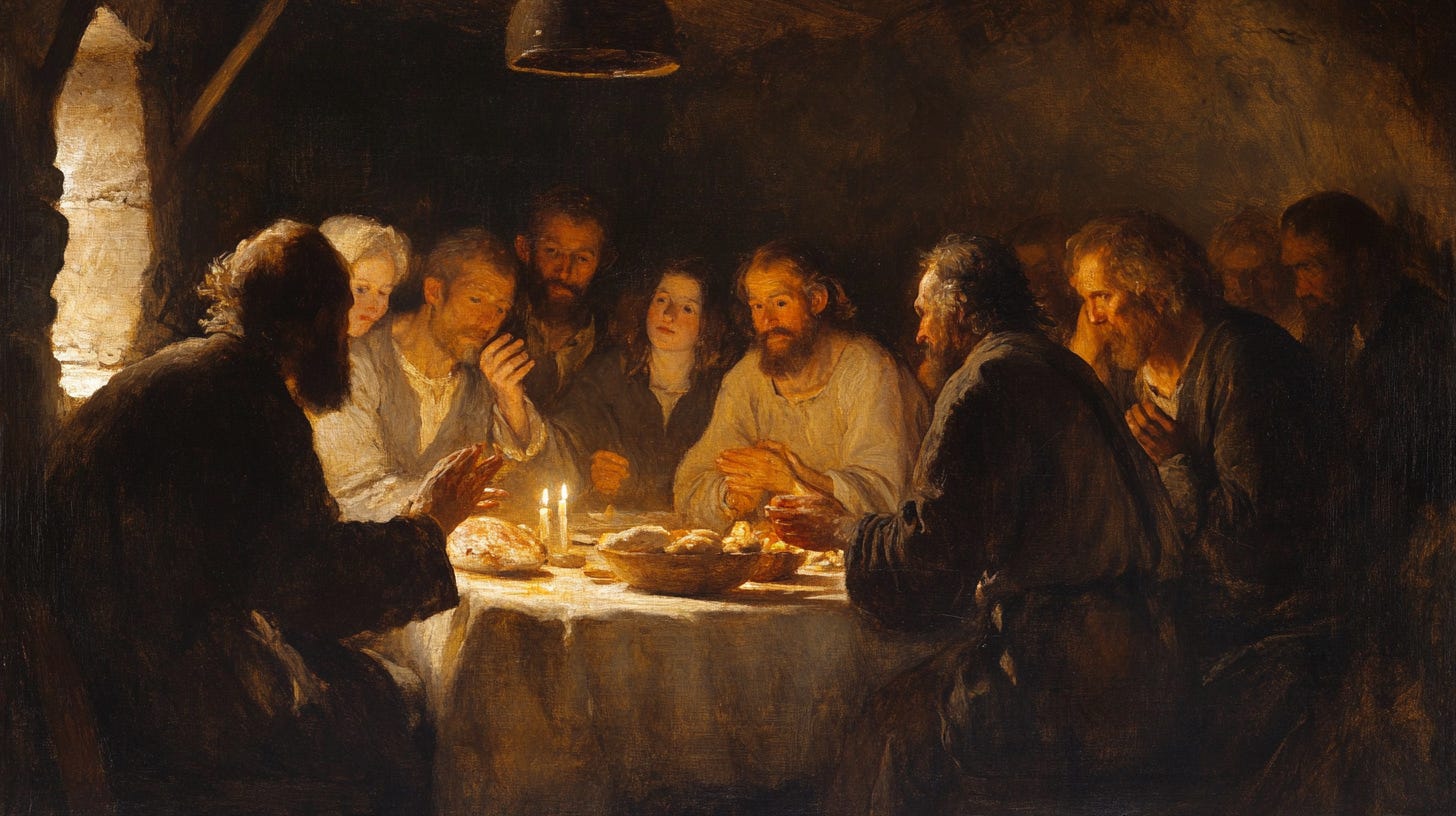
Acts 2:42-47. Not as a mission statement. Not as a church growth model. Just as a portrait of what the resurrection actually produced.
“They devoted themselves to the apostles’ teaching and the fellowship, to the breaking of bread and the prayers. And awe came upon every soul, and many wonders and signs were being done through the apostles. And all who believed were together and had all things in common. And they were selling their possessions and belongings and distributing the proceeds to all, as any had need. And day by day, attending the temple together and breaking bread in their homes, they received their food with glad and generous hearts, praising God and having favor with all the people. And the Lord added to their number day by day those who were being saved.”
No building campaign. No branding strategy. No senior pastor with a book deal. No statement on Roman politics. No donor development plan. No protection of institutional reputation.
One heart. One soul. No needy person among them. (Acts 4:32-34)
The watching world - neighbors, merchants, skeptics, the hostile religious establishment - could not look away. And here is the only explanation Scripture offers: the Sanhedrin looked at Peter and John, two ordinary men with no credentials, no seminary training, no cultural platform, and “recognized that they had been with Jesus.” (Acts 4:13)
That was it. That was the whole thing.
What We Have Built Instead
I have served the local church for more than two decades as a lay elder and board chairman. I love it with something that has survived being wounded by it. That love is not sentimental. It forces honesty.
So let me be honest about the mechanism - because I have watched it operate, and I have lived it.
There comes a moment in the life of many elder boards when Scripture points clearly in one direction and fear points in another. The sin is real. The path forward is clear - name it, follow the biblical process, trust God with the outcome. And then someone in the room says: if we proceed, the congregation will leave. The church will cease to exist.
What happens next reveals everything about what that board actually believes.
The elders who fear God more than the crowd say: if we handle this according to Scripture, God will bless this congregation. He will not destroy it for our obedience. The elders who fear man say: we cannot risk it. And they call that wisdom.
Proverbs 29:25 names what is actually happening: “The fear of man lays a snare, but whoever trusts in the Lord is safe.” That snare is not set by obvious cowards. It is set by men who have convinced themselves that protecting the institution is the same thing as protecting the flock. That silencing a hard truth is the same thing as wisdom.
I have been in that room. I have watched that decision get made. And I have had to reckon honestly with my own failure to fight harder when it mattered.
The words that ended the discussion were not “we need to obey God.” They were not “we need to follow Scripture.” They were this: “We need peace around the table.”
Peace around the table. As though the table were the thing that needed protecting. As though the peace of God and the peace of that room were the same thing.
What was called wisdom was the fear of man dressed in the language of prudence. The board was not primarily asking: what does God require of us here? It was asking: what will happen to us if this gets out? And it chose the institution over obedience.
The cost lands on real people. The ones the sin was committed against. The ones who deserved a board willing to fear God more than the crowd. The ones who may be in your congregation right now - or who already left - carrying wounds from leadership that chose self-preservation when Scripture called for courage.
We do not recover the witness of the early church through better board management or more efficient meetings. We recover it when elders stop mistaking silence for safety. Sweeping sin under the rug and praying it stays there is not prudence - it is cowardice with a theological veneer. It protects no one. It serves no one. It simply delays the reckoning while the wound beneath the surface grows. The people who were harmed go unaddressed. The leader who caused the harm goes unchecked. And the congregation - which deserves shepherds willing to bear the cost of obedience - is handed institutional self-preservation instead.
That is not shepherding. That is the opposite of it.
Why This Is Not the Last Word
I did not write the above to leave you there. But I wrote it to make sure we feel the full weight of the gap before we reach for the comfort.
Here is what remains true:
The risen King who built that first community is still building his Church. Not a different project. The same one. “He is before all things, and in him all things hold together. And he is the head of the body, the church.” (Colossians 1:17-18) He has not vacated that office. He has not handed it off to a denomination or a personality or a political movement.
The gates of hell have not prevailed - not once, not anywhere, not in any century when the Church looked finished.
And here is the thing about that Acts 2 community: they were not exceptional people. They were ordinary people who had been with Jesus. The transformation was not in their talent or their strategy. It was in the encounter. When that encounter is real, the community it produces is still recognizable. Still other. Still the kind of thing the watching world cannot quite explain.
Every local congregation that recovers something of that - genuine mutual care, plural leadership, transparent accountability, servant authority rather than institutional power, a willingness to let the resurrection reorganize everything including the org chart - becomes a witness. Not just to what the church should look like. To the fact that Easter is still true.
That is worth everything it costs to pursue.
The tomb is still empty. Even on Monday. Especially on Monday.
If this connected with you - if it named something you’ve experienced or longed for - share it with someone who needs to hear it. A subscription to Wounded Shepherd is free. The conversation it’s part of is one the church desperately needs.