
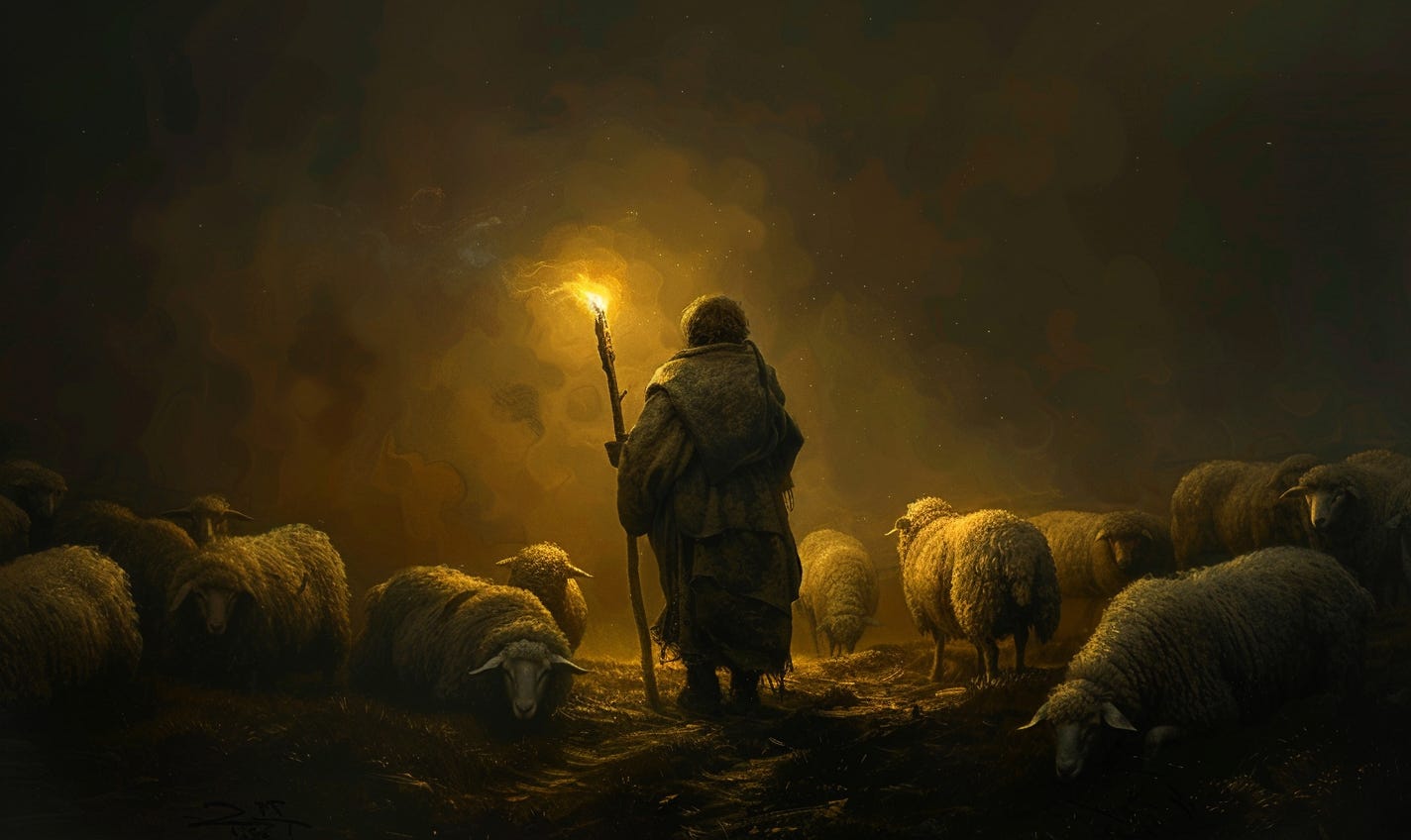
Paul knew he was not going to see them again. He says so to their faces. He had sailed past Ephesus to save time, but he could not leave Asia without one last word to the men who led the church there, so he sent down the coast and called the elders to come to him (Acts 20:17). They came to him at Miletus. And Paul, with the whole weight of a final goodbye on him, with everything a man might say pressing for room, opened his charge to them like this:
“Pay careful attention to yourselves and to all the flock, in which the Holy Spirit has made you overseers, to care for the church of God, which he obtained with his own blood” (Acts 20:28 ESV).
I want to sit with the order of that sentence. Of all the places a farewell to church leaders could begin, Paul began with the one a leader is most likely to skip. Not the flock. Not the doctrine. Not the work. Yourselves. Pay careful attention to yourselves first, he says, and then to all the flock.
The order is not an accident. It is the whole architecture of the charge.
A shepherd is given many souls to watch. He is also given one soul that is harder to watch than all the others, because it is the one he is standing inside. His own. And the strange mercy of Paul’s sentence is that he names that soul first. Before the flock, before the oversight, before the care, watch yourself. The man doing the guarding is the first thing in need of a guard.
I have known this to fail in a very particular way. Not the leader who never watched anything. The leader who watched everything except himself. He kept careful eyes on the flock. He could tell you who was drifting, who was bitter, who was teaching something slightly off. He watched the doctrine like a hawk. And the one field he left unwatched, year after year, was the field he was standing in. He guarded every soul in the building except the one Paul told him to guard first.
It helps to see who Paul is talking to, because he uses three words for them and they are all the same men.
In verse 17 he calls for the elders. In verse 28 he says the Holy Spirit has made these same men overseers. And in the same breath he tells them their work is to care for the flock, which is the work of a shepherd. Elders. Overseers. Shepherds. Three words, one office, one set of men. Paul does not imagine a board of overseers who administer and a separate class of shepherds who tend. The man who oversees is the man who shepherds. The oversight is not the management of an organization. It is the keeping of souls.
That matters, because it is possible to be very good at the first thing and a stranger to the second. You can oversee a local church the way a competent man oversees any institution. Budgets, buildings, staffing, strategy, risk. None of that is shepherding. Paul does not hand the Ephesian elders an organization to administer. He hands them a flock to keep, and then he tells them the flock is not theirs.
Read the rest of the verse slowly, because it is the part that takes the ground out from under every domineering shepherd who ever lived.
Care for “the church of God, which he obtained with his own blood” (Acts 20:28 ESV).
The flock is not the elder’s. He did not gather it. He did not pay for it. It was bought, and the price was not his to pay and never could have been. It was obtained with the blood of God’s own Son. Every soul an elder is set over is a soul The Shepherd died for. The under-shepherd holds them on trust, the way a man holds something precious that belongs to someone else and will one day be asked to account for how he handled it.
You cannot domineer over a flock you remember was bought with that blood. You can only domineer over a flock you have started to think of as yours. That is why the self-watch comes first. A shepherd who stops watching his own soul slowly forgets whose the flock is. He begins to lead as an owner instead of a steward. And the people feel the difference long before they can name it.
Then Paul tells them where the danger will come from, and the second half of his warning is the one that should keep every honest elder awake.
“I know that after my departure fierce wolves will come in among you, not sparing the flock; and from among your own selves will arise men speaking twisted things, to draw away the disciples after them” (Acts 20:29-30 ESV).
Wolves from outside, yes. Paul names them. But he does not stop at the gate. From among your own selves. From the very circle of men standing there hearing this charge, some would rise up and speak twisted things and pull the sheep away after them. The threat is not only the predator who comes over the wall. It is the shepherd who turns. And the line between the two can be quieter than anyone wants to admit. It runs straight through a man’s own unwatched soul.
This is why Paul began where he began. Watch yourselves first, because the wolf you are least prepared for is the one who used to be a shepherd. No one in that circle thought it would be him. That is exactly the problem. The man who is sure it could never be him has already stopped watching the field where it begins.
I have to put myself in this, because the charge does not land honestly if I stand outside it.
There were years when I watched the flock with real care and let my own soul go unwatched. I could read a room. I could see trouble coming three meetings away. I knew who was struggling and who was drifting and who needed a word. And while I kept that careful watch over everyone else, the one field Paul told me to guard first was growing over with weeds I was not looking at. I did not stop watching out of laziness. I stopped because I was sure the danger was always somewhere else. Out there. In the other man. At the gate. I was watching the gate so intently that I never checked the chair I was sitting in.
I am not telling you I became the wolf. I am telling you that I understand, from the inside, how a man could, and never see the turn coming, because he was looking everywhere except where Paul told him to look first. The distance between the faithful elder and the one who arises from among your own selves is not as wide as we comfort ourselves by thinking. It is the width of an unwatched soul.
There is one more thing in the charge, and without it the whole call to watchfulness curdles into something cold.
“Therefore be alert, remembering that for three years I did not cease night or day to admonish every one with tears” (Acts 20:31 ESV).
Be alert. But look at how Paul kept his own watch. Night and day. For three years. With tears. This is not the cold eye of an auditor scanning for liabilities. It is not suspicion dressed up as discernment. Paul watched the Ephesians the way a man watches over people he loves and is about to lose, and he asks them to keep that same watch over themselves. The vigilance Paul commands is an act of love, not of fear. A shepherd who watches his own soul harshly, as a kind of grim self-policing, has misread the charge as badly as the one who does not watch at all. You watch yourself the way Paul watched his flock. With tears. Because the soul in your keeping was bought with blood, and that includes your own.
So if you are an elder, or a deacon, or any kind of shepherd in a local church, hear the order of Paul’s last words to men just like you. Yourselves first. Then the flock. Not because your soul matters more than theirs, but because an unwatched shepherd becomes the very thing the flock most needs protection from, and he becomes it without ever once deciding to.
And if you are not a leader, if you are one of the sheep, and especially if you are one of the sheep who was wounded, there is something here for you too. Part of what happened to you may have been exactly this. A shepherd who watched everything but his own soul, until the field he stopped guarding grew the thing that hurt you. That is not said to excuse him. Paul does not excuse the men who arise from among your own selves. It is said so you can see the shape of it clearly, and so you can hear the better word underneath it.
The flock was obtained with His own blood. It was never the under-shepherd’s, even in the seasons he forgot. The One who bought it has not stopped watching it, not for a single night, not even when the men He set over it did. The Shepherd whose blood bought the church keeps a watch that no failed shepherd can cancel.
Watch yourself first. And take heart that the One whose flock it is has never once looked away.